
Tajweed Articles
All our tajweed articles in one place, written by the same academy that teaches your lessons.
Showing 1 to 12 of 15 articles
Arabic Punctuation Marks in the Quran: A Beginner's Guide
The small marks above and below the letters that tell you exactly how to pronounce and pause, explained one at a time.
Read article
Basic Tajweed for Non-Arabic Speakers: Where to Start
The specific sounds that trip up English and Urdu speakers most, and practical ways to actually fix them with a teacher's help.
Read article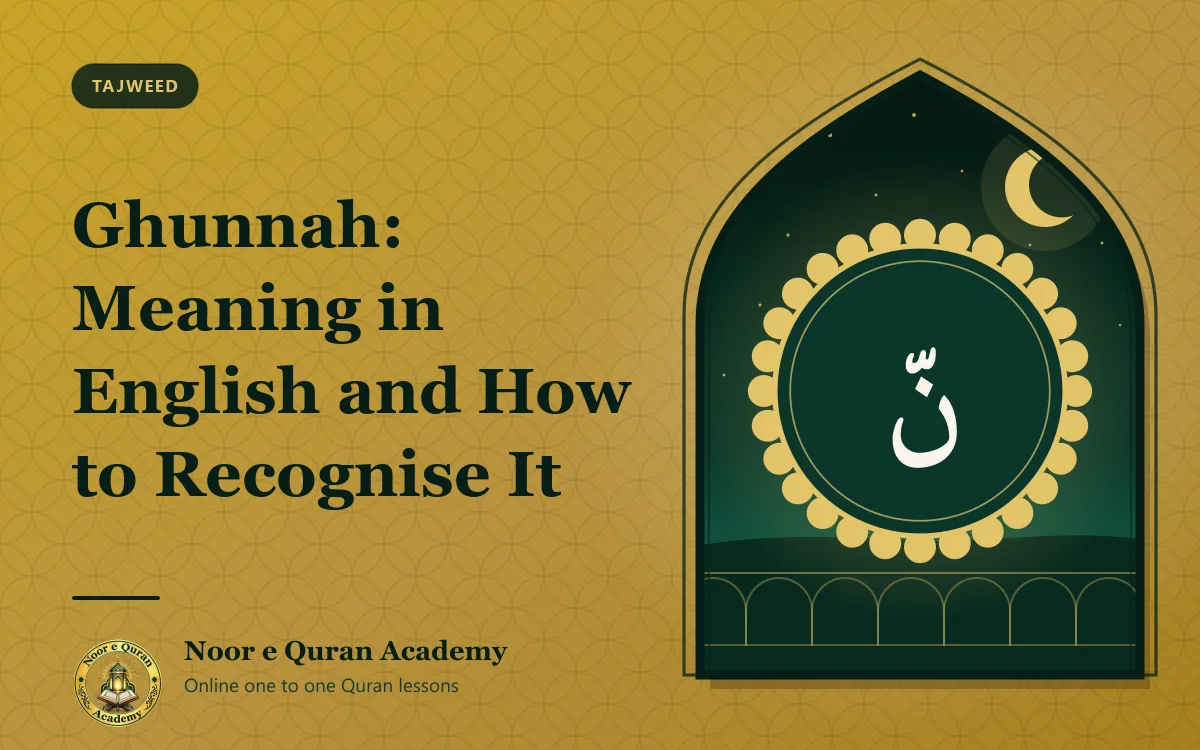
Ghunnah: Meaning in English and How to Recognise It
The nasal sound behind noon and meem, when it's strongest, and how it connects to several other Tajweed rules.
Read article
How to Learn and Recite the Quran with Tajweed: A Beginner's Guide
The three-stage path most students follow, why Tajweed needs a live teacher more than most skills, and where to actually start.
Read article
Lam Shamsiya and Lam Qamariya: Sun and Moon Letters Explained
Why the "L" in "al-" sometimes disappears and sometimes doesn't, with the full letter lists and clear examples.
Read article
Madd Rules in the Quran: Types and Examples Explained
What Madd actually means, the main types you'll encounter, and how long each one is held when you recite.
Read article
Nabr in Tajweed: What It Means in English
The subtle stress rule that adds clarity and rhythm to advanced recitation, and when it's actually applied.
Read article
Noon Sakinah and Tanween Rules: Izhar, Idgham, Iqlab, and Ikhfa
One system, four rules, and 28 letters with no overlap. Here's how to tell which rule applies and why.
Read article
Quran Reading Rules: Etiquette and Practical Basics Every Reader Should Know
The etiquette and practical basics of reading the Quran, purity, intention, starting recitation, and handling the mushaf with respect.
Read article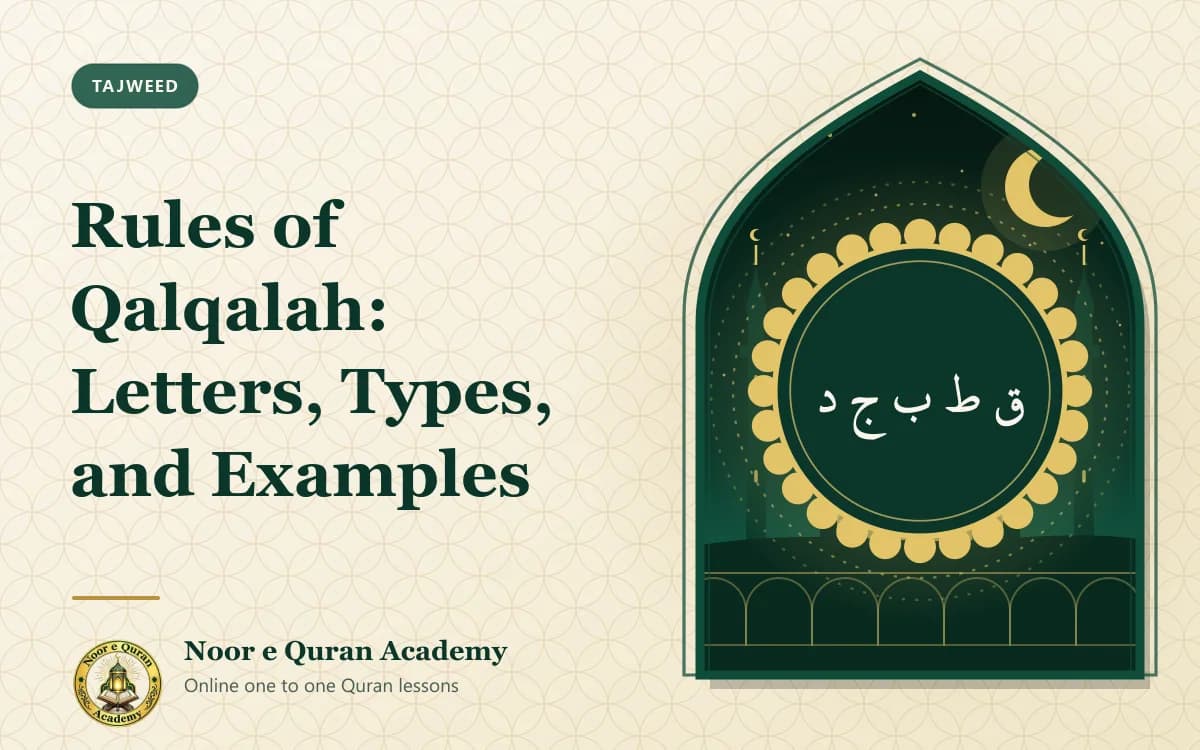
Rules of Qalqalah: Letters, Types, and Examples
The five letters that carry this distinctive bounce, and the difference between a light echo and a strong one.
Read article
Waqf Lazim in Quran: What It Means and Why It Matters
The mandatory pause marked directly in the mushaf, why it exists, and how to recognise it while reciting.
Read article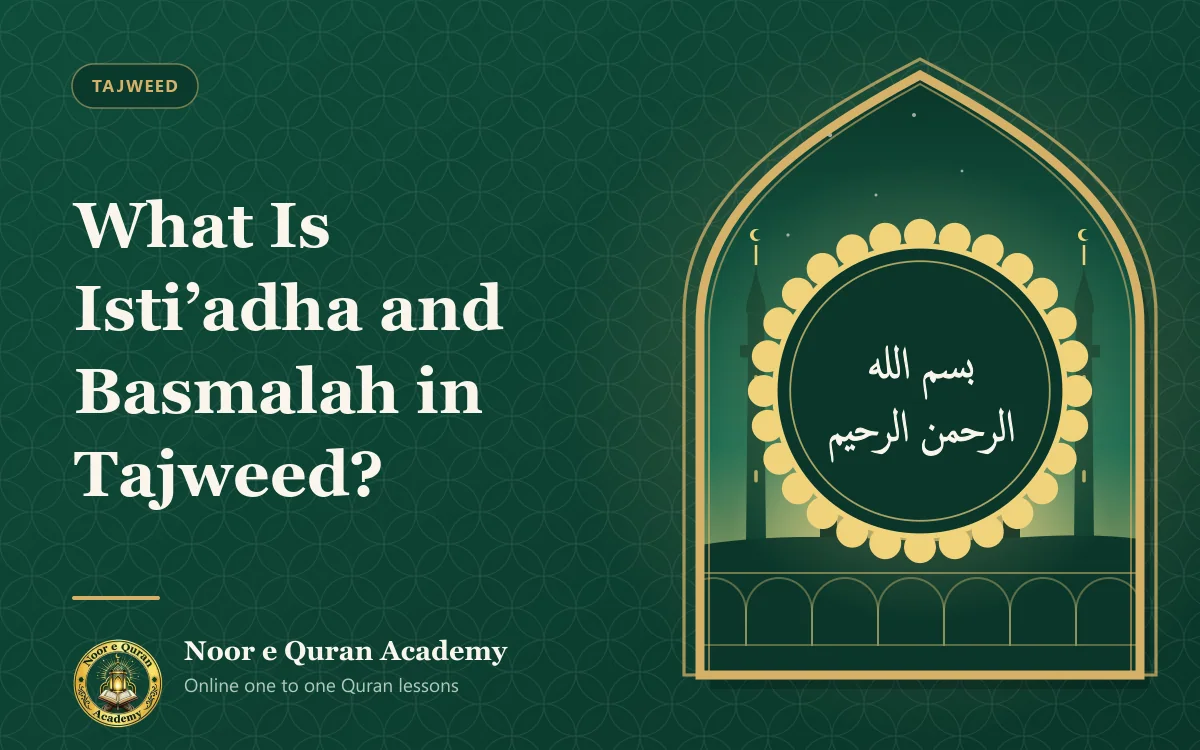
What Is Isti'adha and Basmalah in Tajweed?
The exact wording of both phrases, when each is said, and the one notable exception every reciter learns eventually.
Read articlePrefer to Ask a Teacher Directly?
Book a free trial lesson, no card required, and get a real answer from a DBS-checked teacher.