
Key Takeaways
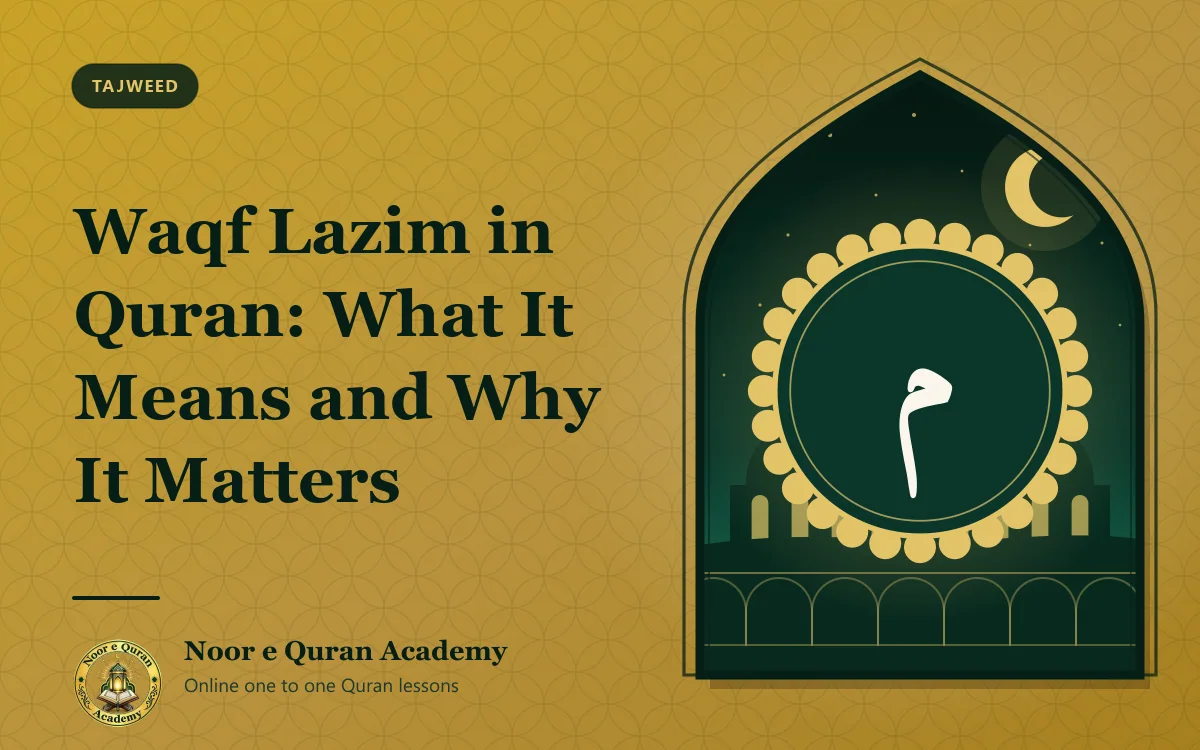
- Waqf Lazim is a mandatory pause marked directly in the mushaf, shown with a small meem-style sign above the word.
- Unlike most stopping points, which are a matter of choice, Waqf Lazim is treated as compulsory, since continuing past it can change how the verse is understood.
- The sign is part of a wider family of waqf, or stopping, marks, each indicating a different level of choice about whether to pause.
- Recognising these signs takes practice, and a teacher pointing them out directly in your own mushaf is the fastest way to learn them.
- These reading marks were added by later scholars for clarity and are not part of the Quran's original revealed text itself.
Waqf Lazim is a mandatory pause marked directly in the mushaf with a small meem sign, used at specific points where continuing recitation without stopping could change how the verse is understood. It's treated as compulsory, unlike most stopping points, which are left to the reciter's choice.
What Waqf Lazim Means
"Waqf" simply means to stop or pause, and "lazim" means necessary or compulsory. Together, Waqf Lazim marks a point in the text where a reciter should pause before continuing, rather than reading straight through. This differs from most of the Quran, where a reciter has some flexibility about exactly where to take a breath or pause.
These points aren't random. Scholars identified specific places where reading straight through, without pausing, risks joining two phrases together in a way that shifts the intended meaning, and marked those points clearly for reciters to follow.
The Sign to Look For
Waqf Lazim is shown with a small letter meem placed above the relevant word in the mushaf. It looks distinct from the other stopping signs used nearby, once you know what to look for, though recognising it quickly does take some practice at first.
Why This Pause Is Treated as Mandatory
Most stopping points in the Quran are a matter of choice, useful for taking a breath, but not required at any specific spot. Waqf Lazim is different because the words on either side of the mark can be read together or separately with a real difference in how the sentence lands. Rather than leaving this to guesswork, scholars marked these specific points clearly, so every reciter pauses at the same place.
A teacher can show you the exact examples in your own mushaf and explain what changes if the pause is missed, which is far more useful than trying to memorise abstract rules without seeing them in context.
Where Waqf Lazim Fits Among Other Stopping Signs
Waqf Lazim is one of several stopping signs used throughout the mushaf, each indicating a different level of choice.
| Sign Type | What It Means |
|---|---|
| Waqf Lazim | A mandatory pause |
| Waqf Jaiz | Pausing is permitted, and generally recommended |
| Waqf Mamnoo | Pausing here should be avoided |
| Mu'anaqah (paired dots) | Pause at one of two nearby points, but not both |
Learning the full set takes time, and it's usually covered gradually as part of structured recitation practice rather than all at once.
How to Recognise These Signs in Practice
The fastest way to build recognition is repeated, corrected reading rather than memorising a list of symbols in isolation. A teacher reading alongside you will point out each sign as it comes up in the passage you're actually working on, which builds familiarity naturally over weeks of practice rather than through abstract study.
A Note on Where These Signs Come From
It's worth knowing that waqf signs, like vowel marks, were added to the mushaf by later scholars as a reading aid, not part of the Quran's original revealed text. This is standard across nearly every printed copy today, and it exists purely to help reciters read accurately and consistently, not to change the text itself.
If you'd like a teacher to walk through waqf signs directly in your own reading, this is typically covered as part of a structured Tajweed course, and a free trial lesson is a good way to see how that's taught before committing to a regular plan.